Wondering how to Earn Money from Blogging in 2026 bloggers actually make money online?
The truth is, blogging is not a get-rich-quick method. It takes consistent effort, patience, and time to build a blog that generates income.
Many people start blogging after hearing that it’s an easy way to earn online, but they often don’t understand the real process behind it or how bloggers actually monetize their content.
Most blogging income methods also require some level of investment—whether it’s time, learning new skills, or sometimes even money for tools and services.
In this article on WizardBlog, we’ll break down the main ways bloggers earn money and share practical strategies you can use to start building your own blogging income step by step.
Disclosure: This article may include affiliate links. If you make a purchase through these links, we might receive a small commission—without any additional cost to you.
Start a blog with zero experience
Our free guide will take you through every step of the way
1. Understand Your Target Audience
Before you start writing your first blog post, it’s important to know exactly who you’re creating content for. Successful blogs are built around helping readers solve problems, answer questions, and achieve their goals.
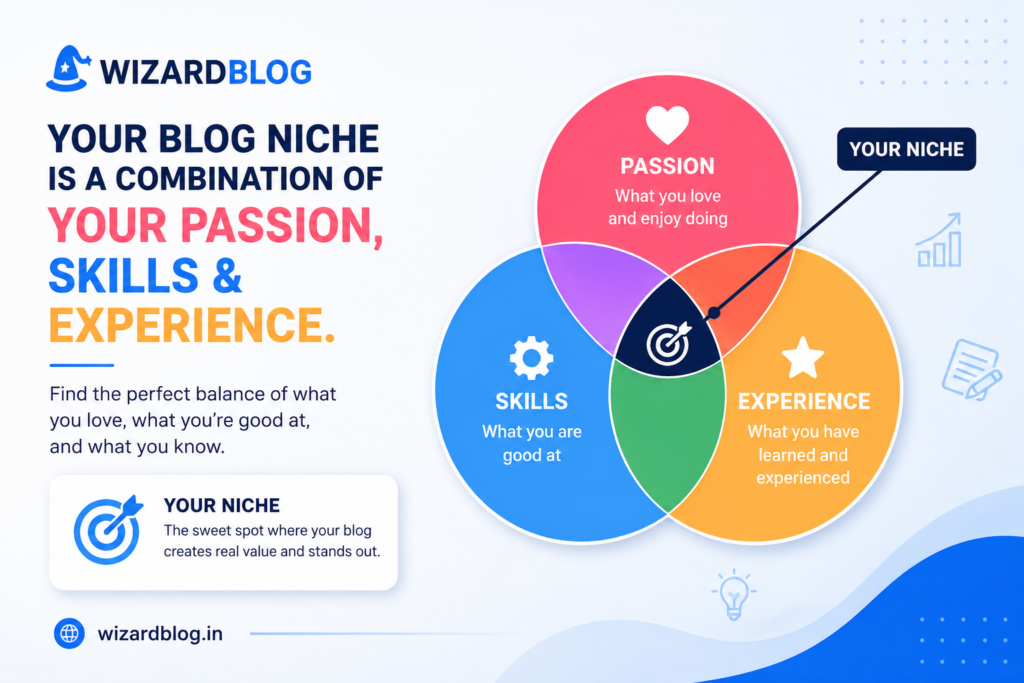
At WizardBlog.in, we recommend focusing on your niche and identifying a common challenge your audience faces. Think about what beginners in your niche are searching for online and create content that provides a clear, practical solution.
This step becomes even more important if your goal is to monetize your blog in the future. When you consistently publish valuable content that meets your audience’s needs, you’ll build trust, attract more visitors, and create opportunities to generate passive income through your blog.
Take a few minutes to research your niche, understand your readers’ pain points, and choose a topic that genuinely helps them. A well-targeted first blog post can set the foundation for your blog’s long-term success.
Many new bloggers believe their first post should be an introduction about themselves and their blog. While that approach can work, it’s often more effective to start with content that immediately helps your readers.
Instead of using your first post to share your story, consider creating a dedicated About Me page where visitors can learn more about who you are, why you started your blog, and what they can expect from your content.
Your first blog post should focus on solving a problem or answering a question that your target audience is already searching for.
For example, if your blog is about travel, you could publish helpful guides such as:
- How to Plan a Budget-Friendly Trip to Sri Lanka
- Best Ways to Travel from India to Sri Lanka
- Essential Travel Tips for First-Time International Travelers
Choose a topic that reflects your knowledge, interests, and the value you want to provide to readers.
However, if you’re building a personal blog centered around your life experiences, journey, or opinions, introducing yourself in your first post can be a great way to connect with your audience and establish your personal brand.
The key is to think about what your readers will find most useful and engaging from the very beginning.
2. Choose the Right Keyword for Better SEO Results
If you want your blog to receive visitors from Google, understanding keyword research is essential.
However, blogging success doesn’t happen overnight. It often takes time for search engines to trust a new website and start sending consistent traffic.
SEO (Search Engine Optimization) is the process of improving your website and content so that search engines can easily understand and rank your pages. When done correctly, SEO can help you attract targeted readers and grow your blog organically.
One of the biggest mistakes beginners make is targeting highly competitive keywords. While these keywords may have a large search volume, ranking for them can be extremely difficult, especially for a new blog.
For example, a broad keyword like “how to travel” is dominated by established websites with years of authority and thousands of backlinks. Competing against them can be challenging for a beginner blogger.
A smarter approach is to focus on more specific, low-competition keywords that have a clear search intent. These keywords are often easier to rank for and can bring highly targeted visitors to your blog.
When you search for a broad topic on Google, you’ll notice several related keyword suggestions. These suggestions can help you discover content ideas that people are actively searching for and provide excellent opportunities for creating SEO-friendly blog posts.
By selecting the right keywords from the beginning, you can increase your chances of ranking higher in search results and growing your blog faster.
When people search online, they often use detailed phrases instead of single words. These search terms are known as long-tail keywords, and they usually reflect a specific question, problem, or need.
For example, rather than searching for “blogging,” a user might search for “how to start a blog and make money in 2026.” These detailed searches are easier to target and often have less competition.
For beginner bloggers, long-tail keywords can be a great opportunity to attract relevant traffic from search engines. Since these keywords are more specific, visitors who find your content are often more interested in the exact information you’re providing.
To discover keyword ideas, you can use professional keyword research tools that show search volume, competition levels, and related keyword suggestions. These insights help you choose topics that have the potential to rank well in search results.
In addition to keyword research, it’s worth investing time in learning the fundamentals of SEO. Understanding how search engines work will help you create better content, improve your rankings, and increase organic traffic over time.
Many SEO platforms offer free training resources, tutorials, and beginner-friendly courses that explain topics such as keyword research, on-page SEO, content optimization, and search engine rankings. These resources can help you build a strong foundation and avoid common mistakes that new bloggers often make.
The more you learn about SEO and keyword strategy, the easier it becomes to create content that both readers and search engines love.
3. Create a Compelling Blog Post Title
Your blog post title is the first thing readers notice, and it often determines whether they click on your content or scroll past it. Even the most informative article can struggle to attract visitors if the headline fails to grab attention.
A strong title should clearly communicate the value of your content while sparking curiosity. Readers should instantly understand what they will learn and why it’s worth their time.
When brainstorming titles, don’t settle for the first idea that comes to mind. Create multiple headline variations and compare them before making a final decision. You can also seek feedback from friends, fellow bloggers, or use AI-powered writing tools to generate fresh title ideas.
Adding persuasive words such as ultimate, proven, easy, complete, powerful, step-by-step, or beginner-friendly can make your headlines more appealing and encourage higher click-through rates.
For example, instead of writing: “Blogging Tips”
You could write: “15 Proven Blogging Tips to Grow Your Traffic Faster in 2026”
The second title is more specific, creates curiosity, and clearly highlights the benefit for readers.
Remember, your headline acts as the gateway to your content. Spend time crafting a title that captures attention, creates interest, and motivates people to click and read your blog post.
4. Write an Engaging Introduction That Hooks Your Readers
The introduction is one of the most important parts of your blog post. It sets the tone for the entire article and determines whether readers continue scrolling or leave your page.
A strong introduction should quickly explain what the article is about and why it matters to the reader. Give visitors a clear reason to keep reading by highlighting the benefits they will gain from your content.
One effective approach is to start with a common problem, surprising fact, relatable situation, or thought-provoking question. This immediately captures attention and helps readers feel connected to the topic.
For example, if your article is about making money from blogging, you could begin by addressing a challenge many beginners face and then introduce your article as the solution.
Your goal is simple: identify the reader’s problem and show them that your guide will help solve it.
In addition, make sure your introduction aligns with the promise made in your headline. If readers click expecting valuable information, your opening section should reassure them that they are in the right place.
For longer articles, especially those exceeding 1,000 words, consider adding a Table of Contents near the beginning of the post. This improves navigation, enhances the user experience, and allows readers to jump directly to the sections that interest them most.
A well-crafted introduction not only grabs attention but also encourages readers to stay longer and engage with your content from start to finish.
5. Write in a Natural and Reader-Friendly Style
When creating your first blog post, focus on writing in a way that feels natural and conversational. Imagine you’re explaining a topic to a friend rather than writing a formal report.
Readers connect more with content that feels authentic and easy to understand. Don’t be afraid to let your personality shine through your writing. Your unique voice is what will help your blog stand out from thousands of others on the internet.
Instead of worrying about making every sentence perfect, concentrate on delivering useful information and solving your readers’ problems. Valuable content is always more important than flawless writing.
As a general rule, aim to create detailed and informative articles. While shorter posts can work in some cases, comprehensive content often performs better in search engines and provides more value to readers.
To improve readability, break your content into clear sections using descriptive subheadings. Keep paragraphs short and easy to scan, ideally between three and five lines. This makes your article more enjoyable to read, especially on mobile devices.
Visual elements can also enhance the user experience. Adding screenshots, illustrations, charts, infographics, or relevant images helps explain concepts more effectively and keeps readers engaged throughout the article.
If you don’t have design experience, tools like Canva and other graphic design platforms make it easy to create professional-looking visuals for your blog posts.
Remember, the goal isn’t to sound like an expert writer—it’s to communicate your ideas clearly, provide value, and create content that readers genuinely enjoy consuming.
6. Finish Your Blog Post with a Strong Conclusion
A well-written conclusion helps readers remember the key takeaways from your article and leaves a lasting impression. However, your conclusion doesn’t need to be lengthy. Keep it concise, clear, and focused on the main message of your post.
If you’ve written a detailed article, consider briefly recapping the most important points covered throughout the guide. This makes it easier for readers to review the information and reinforces the value of your content.
The conclusion is also the perfect place to encourage readers to take the next step. This is where a Call-to-Action (CTA) becomes important.
After spending time reading your article, visitors are more likely to engage with your content if you provide clear instructions on what to do next. Depending on your goals, you can invite readers to:
- Share the article with friends or on social media
- Leave a comment and join the discussion
- Subscribe to your email newsletter
- Read another related blog post
- Download a free resource or guide
- Explore a recommended product or service
A strong CTA not only increases engagement but also helps build a loyal audience around your blog.
Remember, your conclusion should do more than simply end the article—it should inspire readers to take action and continue their journey with your content.
Ready to Publish Your First Blog Post?
Now that you understand the essential steps of blog writing, it’s time to put your knowledge into action and create your first blog post.
One of the most important factors in successful blogging is choosing the right keyword before you start writing. A well-researched keyword can help your content appear in search results, attract targeted visitors, and increase your chances of ranking on Google.
Without proper keyword research, even a high-quality article may struggle to reach the audience it’s meant to serve.
To make your blogging journey easier, here are some tools that many bloggers use to improve content quality and SEO performance:
1. Keyword Research Tools : Keyword research platforms help you discover search terms, analyze competition, and find content opportunities that can drive organic traffic to your blog
2. SEO Plugins for wordpress : If you are using wordpress, an SEO plugin can guide you in optimizing titles, meta descriptions, headings, and other important on-page SEO elements.
3. Grammer and Writing Assistants:Writing tools can help you improve readability, fix grammar mistakes, and create content that is clear, professional, and easy for readers to understand.e SEO elements.
While tools can simplify the process, remember that valuable content is still the foundation of a successful blog. Focus on helping your audience, answering their questions, and consistently publishing useful articles.
The more you write and learn, the better your blogging skills will become over time.
Final Thoughts
Every successful blogger started with a single post. Don’t wait for perfection—start publishing, keep learning, and improve with each article you create.
If you found this guide helpful, consider sharing it with other aspiring bloggers, exploring more tutorials on WizardBlog.in, and continuing your journey toward building a successful blog in 2026 and beyond.
Happy Blogging and Best of Luck on Your Blogging Journey! 🚀